Mattel UNO Card Game Review: Is the Colorblind-Accessible Tin Edition Worth It?
Affiliate disclosure: This article contains affiliate links. If you buy through one of our links, OzoneShip may earn a commission at no extra cost to you. (If OzoneShip is enrolled in Amazon Associates, also add the required “As an Amazon Associate I earn from qualifying purchases” line to the site.)
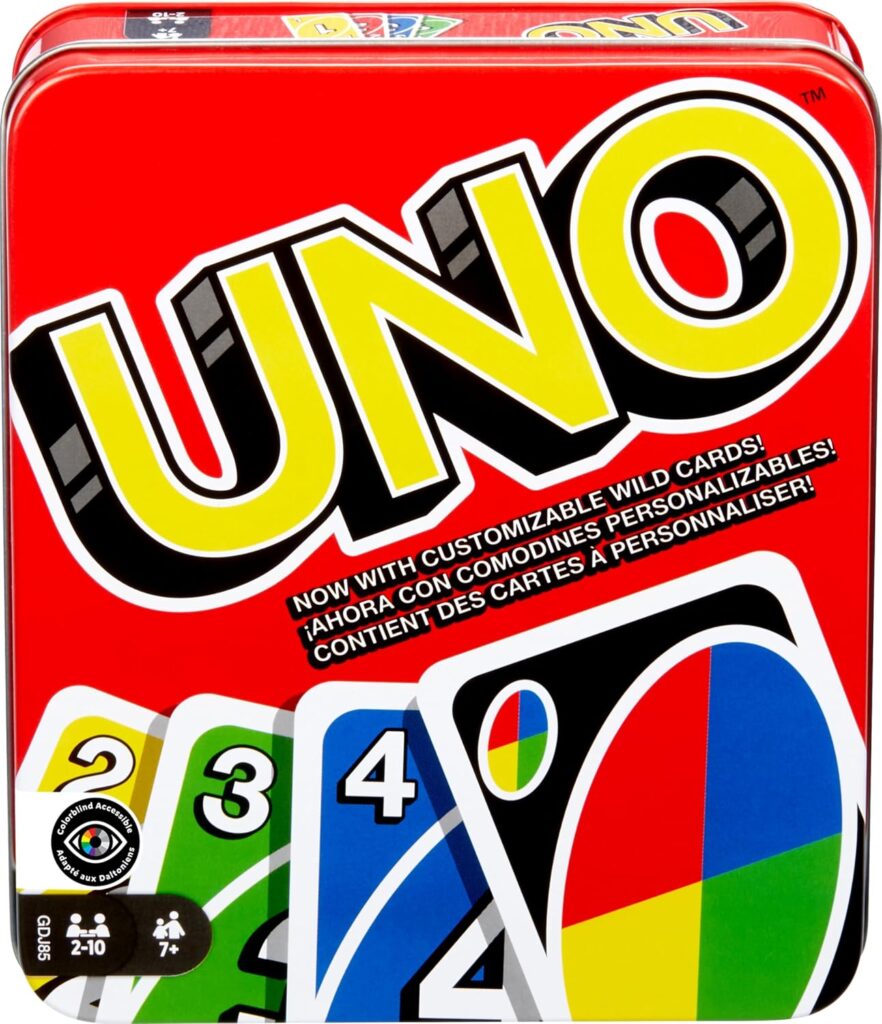
Almost everyone has played UNO at least once — at a sleepover, a family reunion, or that one cousin’s birthday party where somebody dramatically slapped down a Draw Four and the whole table erupted. It’s one of the few card games that doesn’t need an introduction. What’s changed is the deck itself: this particular Mattel Games UNO edition is an Amazon-exclusive tin set built around a colorblind-accessible design, where action cards carry graphic symbols alongside their text, not instead of it.
That’s a small detail on paper, but it’s the kind of thing that quietly makes a decades-old game easier for more people to actually play — including kids still learning their colors and players with any form of color vision deficiency, who make up a meaningful share of any big family table.
Quick verdict
This is still the UNO you already know: match colors or numbers, dump your cards first, yell “UNO!” before you’re down to one or face a penalty. What makes this specific version worth calling out is the accessible symbol system and the sturdy collectible tin, which solves the single most annoying thing about card games — the box falling apart within a month and cards sliding out everywhere.
Best for: families with kids 7+, mixed groups where someone has color vision deficiency, anyone who wants a UNO set that won’t fall apart in a drawer, people building a “go-to” game shelf.
Skip it if: you already own a UNO deck in good condition and don’t care about the accessible symbols or the tin packaging — the core gameplay itself hasn’t changed.
Mattel UNO at a glance
| Feature | Details |
|---|---|
| Product | Mattel Games UNO Card Game (Amazon Exclusive, Colorblind Accessible) |
| Brand | Mattel Games |
| Model number | GDJ85 |
| ASIN | B07P6MZPK3 |
| Recommended age | 7 years and up |
| Players | 2 to 10 |
| Main components | 112 cards + instructions |
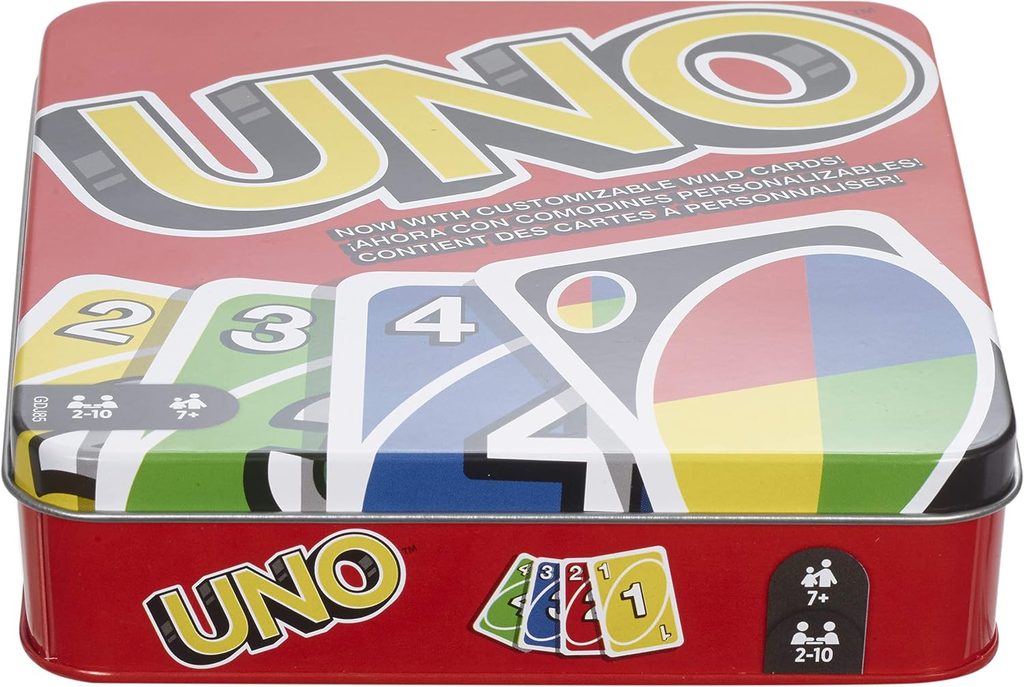
| Packaging | Sturdy collectible tin, approx. 6″ x 6.7″ x 2″ |
| Material | Cardstock |
| Batteries required | No |
| Special feature | Colorblind-accessible symbols on action/color cards |
Who should buy this — and who shouldn’t
UNO’s biggest strength has always been that literally anyone at the table can join, regardless of age or experience. This edition leans further into that by making sure “anyone” genuinely includes players with color vision deficiency, who can otherwise struggle to tell a red Draw Two from a green one during a fast round. The added graphic symbols mean color isn’t the only way to identify a card — which matters more than it sounds like at a loud, fast-paced table where people are calling out numbers and colors in the same breath.
It suits:
- families with kids 7 and up
- mixed-age game nights where grandparents, parents, and kids are all playing together
- groups where someone has any form of color blindness
- people replacing a beat-up old UNO box with something that’ll actually survive the shelf
- anyone building a small collection of reliable, no-setup party games
It’s probably not for you if:
- you already have a working UNO deck and don’t need the tin or the accessible symbols
- you’re looking for something with more strategic depth than a classic shedding game offers
- you want a cooperative game rather than a competitive, sometimes chaotic one — UNO tables get loud
How we researched this review
OzoneShip hasn’t personally tested this specific Amazon-exclusive tin, so this is a research-based guide rather than a hands-on review. The specifications here — 112 cards, the 7+ age recommendation, the 2–10 player range, the tin packaging dimensions, and the colorblind-accessible symbol system — come directly from Mattel’s own product listing for model GDJ85. The core rules (matching colors or numbers, Action and Wild Cards, calling “UNO,” playing to 500 points) reflect Mattel’s official UNO rules, which this edition follows without changes to the base gameplay.
What we can’t speak to firsthand is exactly how sturdy the tin proves to be after months of actual use, or how the cardstock holds up under repeated shuffling — that’s the kind of detail that needs real hands-on time with this exact box.
What’s in the tin
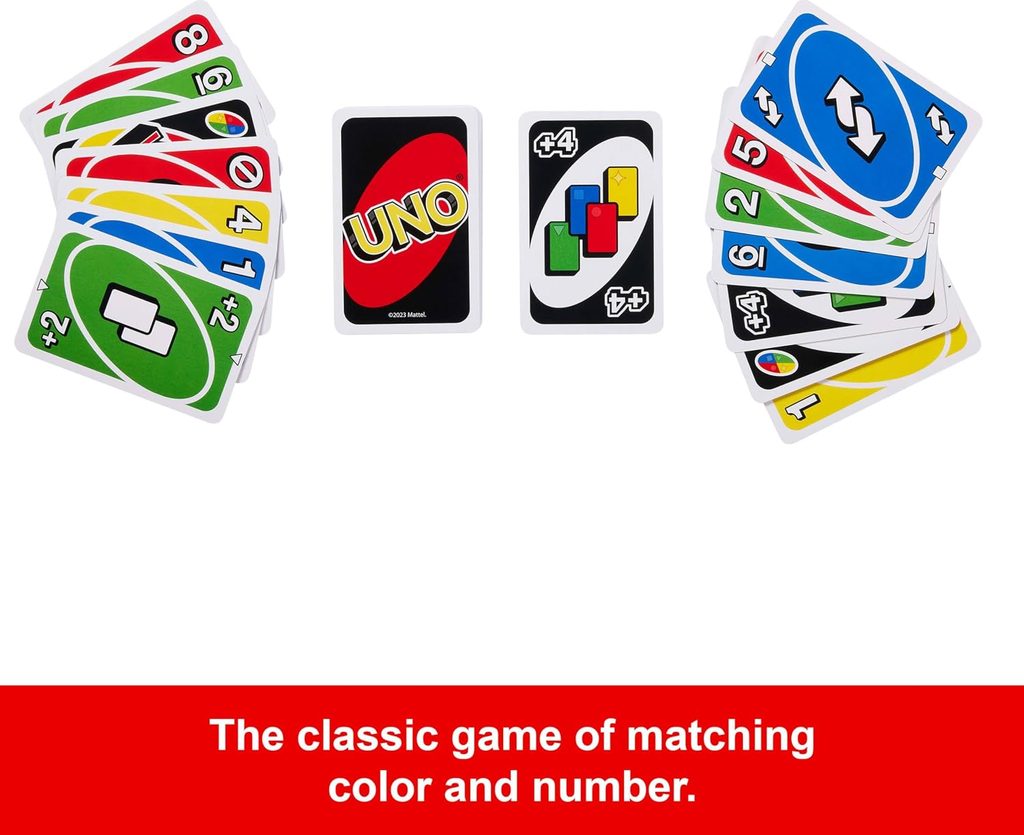
You get 112 cards and an instruction sheet, all housed in a collectible tin roughly 6 inches by 6.7 inches by 2 inches — small enough to toss in a bag, sturdy enough that it won’t crush like a standard cardboard box does after a few trips. The deck covers the full standard UNO set: number cards in four colors, action cards (Skip, Reverse, Draw Two), Wild and Wild Draw Four cards, and — a detail worth calling out — three blank Wild Cards that let players write in their own house rules and erase them between games.
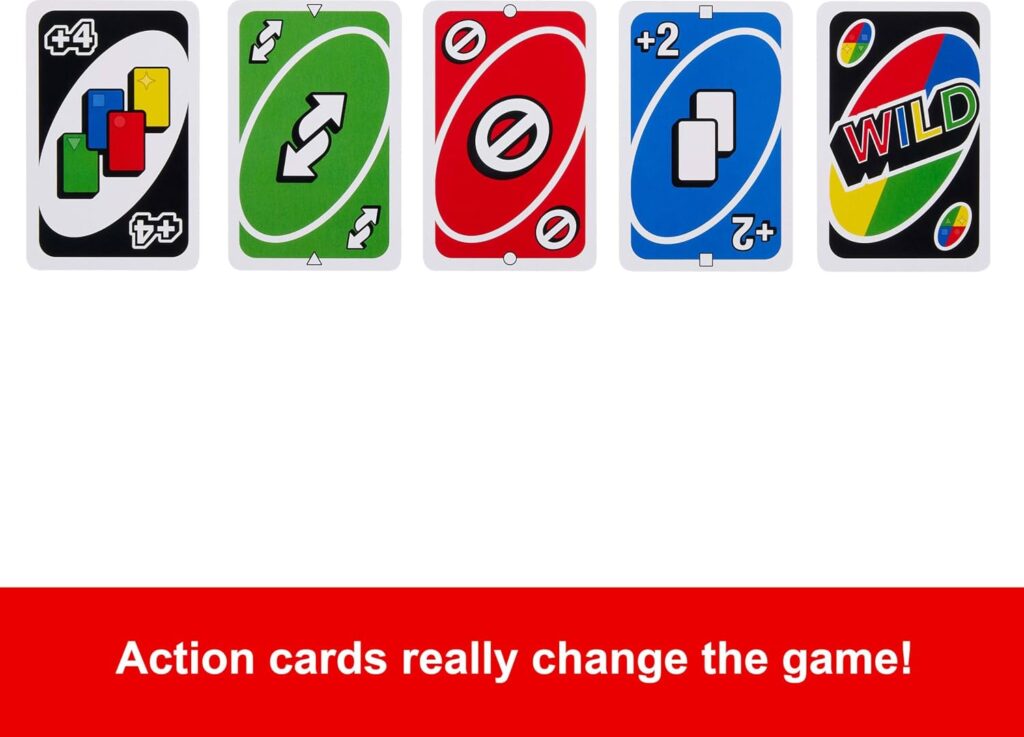
What sets this particular deck apart is the accessibility layer. Action cards display graphic symbols next to the usual text and numbers, so identifying a card doesn’t rely purely on distinguishing red from green under dim lighting or for players with color vision deficiency. It’s the same deck everyone already knows how to play, just easier to actually read.
How to play UNO
1. Deal the cards. Each player gets 7 cards. The rest forms the draw pile, with the top card flipped to start the discard pile.
2. Match color or number. On your turn, play a card that matches the color or the number of the top discard. If you can’t, you draw from the pile — and if that card is playable, you can play it immediately.
3. Use Action Cards strategically. Skip forces the next player to lose their turn. Reverse flips the direction of play. Draw Two forces the next player to pick up two cards and lose their turn.
4. Play your Wild Cards wisely. A Wild lets you change the active color to whatever you want. A Wild Draw Four does the same and forces the next player to draw four — though official rules only allow it when you have no other playable card matching the current color.
5. Call “UNO!” at one card. The moment you’re down to your last card, you have to say “UNO” out loud. Forget, and get caught before the next player takes their turn, and you draw two cards as a penalty.
6. Score the round. The first player to empty their hand wins the round and scores points based on the cards left in every other player’s hand. Play continues, round after round, until someone reaches 500 points.
Using the blank Wild Cards
This is the detail that keeps UNO from ever feeling completely locked in. The deck includes three blank Wild Cards, and the official rules explicitly invite players to write in their own custom rule for each one — anything from “everyone switches hands” to a house rule your family has used for years. Erase and rewrite them as often as you want; no two games have to play quite the same.
Is UNO good for kids?
Mattel recommends this edition for ages 7 and up, which tracks with what the game actually asks of players: recognizing colors and numbers, basic counting, and simple turn-based decision-making. Mattel also notes the game can help build attention, memory, and light strategic thinking — reasonable side effects of a game that requires you to track what’s been played and plan a few turns ahead, though we wouldn’t oversell it as an educational tool first and a fun game second.
For younger kids specifically, the accessible symbol system on this edition can genuinely help — it gives an extra, non-color way to recognize a card, which is useful even for kids who aren’t colorblind but are still learning to read quickly under pressure.
Is UNO good for adults and parties?
Yes, for a very different reason than it works for kids. Adults don’t need UNO to be complex — its appeal is how quickly it escalates. A calm round can flip into chaos the instant someone drops a Draw Four, and because rounds are short, it’s easy to fit in “one more game” indefinitely. With 2 to 10 players supported, it scales from a quiet two-person round to a full party table without needing extra decks.
What stands out
- Colorblind-accessible symbols — a genuinely useful upgrade over a standard UNO deck, not just a marketing label.
- The collectible tin — noticeably more durable than a typical cardboard box, and easier to store or pack.
- 112-card count and wide player range (2–10) — flexible enough for almost any group size.
- Three blank Wild Cards — a built-in way to keep the game from feeling identical every time.
Where it falls short
- The core game hasn’t changed. If you already own UNO, this is mainly an upgrade in packaging and accessibility, not new gameplay.
- Cardstock still wears with heavy use — like most card games, expect some softening at the edges after frequent shuffling.
- Large groups slow the pace down, since more players means more turns between yours.
- Wild Draw Four disputes are common — the official rule restricting it to “no other playable card” is easy for casual groups to forget or ignore, which can cause arguments at the table.
Pros and cons
Pros
- Colorblind-accessible symbol system
- Sturdy collectible tin, better than standard packaging
- 112 cards, supports 2–10 players
- Easy to teach, minimal setup
- Three customizable blank Wild Cards
- Works for kids, teens, and adults at the same table
Cons
- Same core gameplay as any standard UNO deck
- Cardstock will show wear over heavy, repeated use
- Large groups mean longer waits between turns
- Wild Draw Four rule disputes are a recurring party-game annoyance
Is it good value?
Amazon pricing shifts, so it’s worth checking the current listing rather than anchoring to one number. What you’re paying for beyond a standard UNO deck is the tin — which protects the cards better than typical packaging — and the accessible symbol design, which has real value for households where color vision deficiency is a factor. If you don’t already own a working UNO deck, or your current one is falling apart, this edition is a reasonable upgrade rather than a purely cosmetic one.
Frequently asked questions
How many cards are in this UNO set? 112 cards, plus an instruction sheet.
How many people can play? 2 to 10 players, according to Mattel’s listing.
What age is it recommended for? 7 years and up.
What makes this edition colorblind accessible? Action cards display graphic symbols alongside the standard text and numbers, so players don’t have to rely on color alone to identify a card.
What are the blank Wild Cards for? The deck includes three blank Wild Cards that players can write custom house rules on and erase between games.
How do you win UNO? The first player or team to reach 500 points across multiple rounds wins.
What happens if you forget to say “UNO”? If you’re caught with one card and haven’t called “UNO” before the next player’s turn, you draw two cards as a penalty.
Does this set include instructions? Yes, the tin includes an instruction sheet alongside the 112 cards.
Final verdict: is this Mattel UNO edition worth it?
UNO doesn’t need reinventing, and this edition doesn’t try to. What it does is fix the two things that quietly annoy people about most card game sets: a box that falls apart, and a deck that only fully works if everyone at the table sees color the same way. The collectible tin solves the first problem. The accessible symbol system solves the second.
For families, mixed-age game nights, and anyone who wants a reliable, no-setup party game that scales from two players to ten, this is a straightforward, easy recommendation. If you already own a working UNO deck and don’t care about either upgrade, there’s no urgent reason to replace it — but if yours is falling apart or your table includes someone who struggles with color, this version earns its price.
About the author: [AUTHOR NAME] writes about family games, playing cards, toys, and screen-free entertainment for OzoneShip, focusing on what a product does well, who it’s actually for, and where it falls short.