UNO in a Tin Review: What You Actually Get
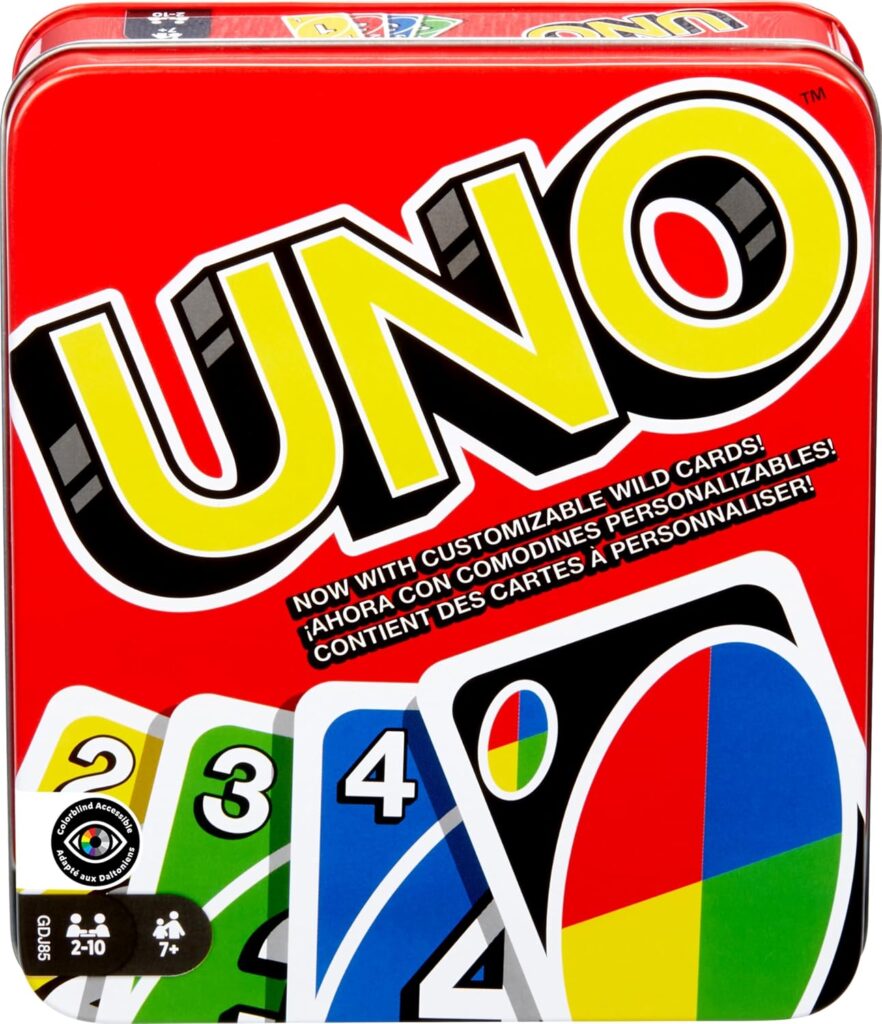
Quick take: This version of UNO keeps the familiar color-and-number matching game but puts the 112-card deck inside a sturdy collectible storage tin. It is rated for ages 7+ and supports 2–10 players, making the tin format particularly useful for travel, family game nights, and keeping the cards together. :contentReference[oaicite:0]{index=0}
The important difference isn’t new gameplay: the main attraction here is the storage format and a few useful deck features, including color-identifying symbols and customizable Wild cards. If you already own a standard UNO deck, the question is less “Is this a completely different game?” and more “Is the tin and this particular deck worth having?”
UNO in a Tin Review: What You Actually Get
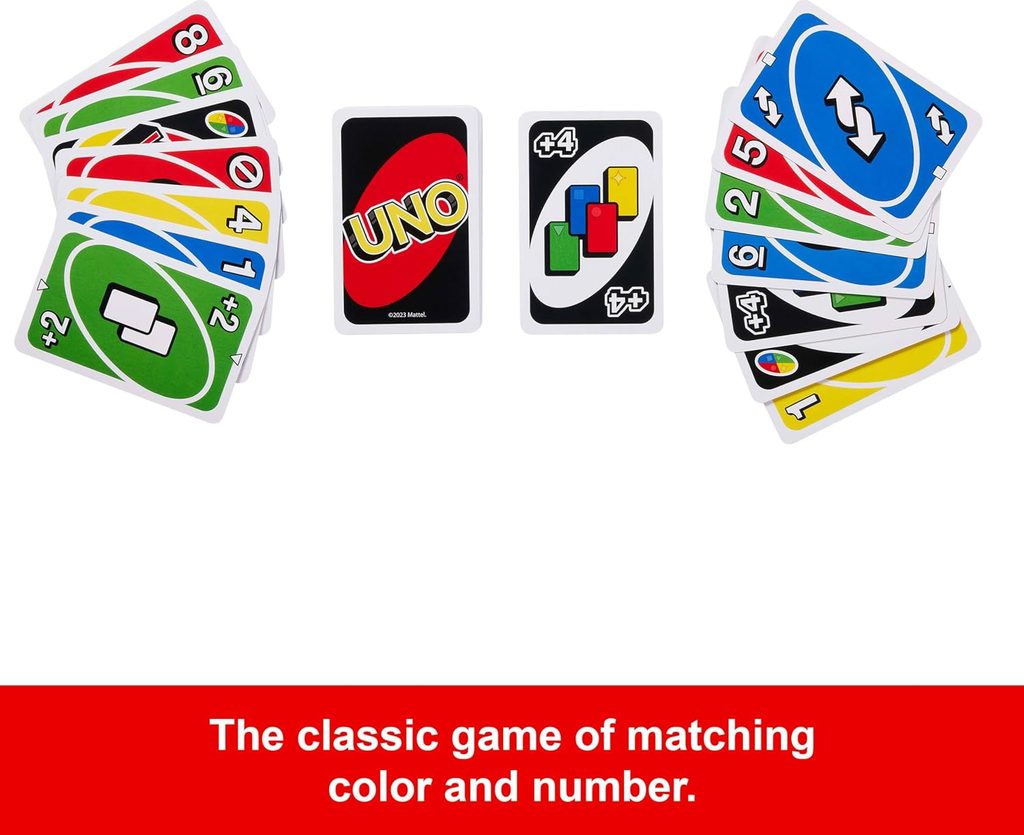
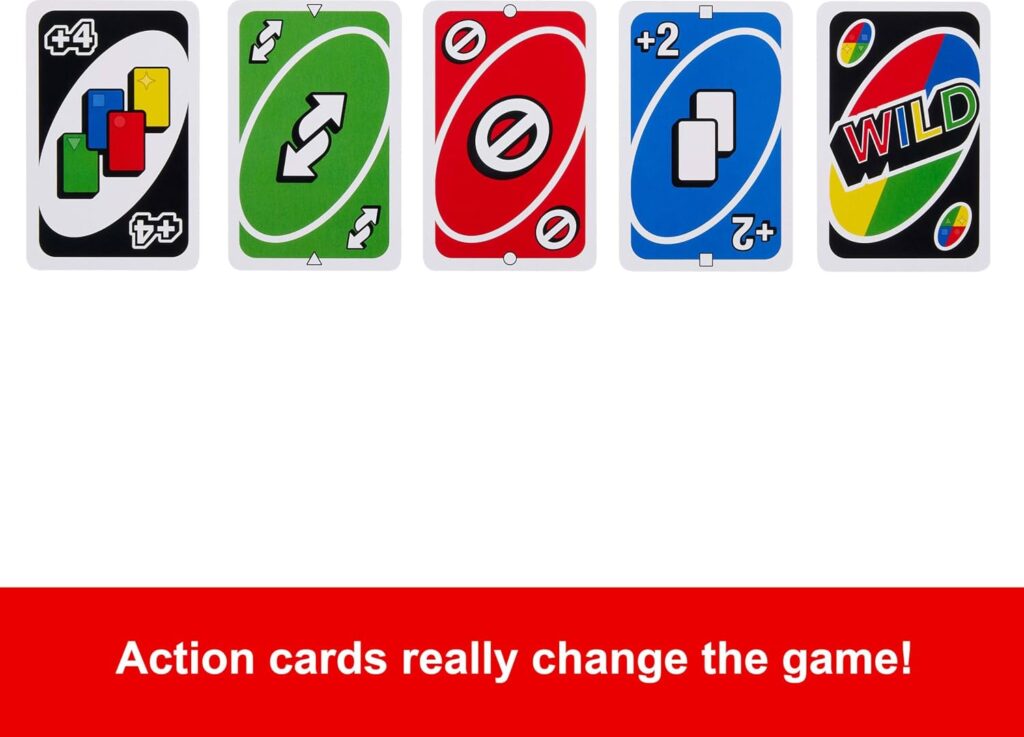
The classic UNO experience is simple: players take turns matching the top card of the discard pile by color, number, or symbol, while action cards can change the direction of play, make someone skip a turn, or force another player to draw cards. The goal is to get rid of every card in your hand, and when you are down to one card, you have to call “UNO.” :contentReference[oaicite:1]{index=1}
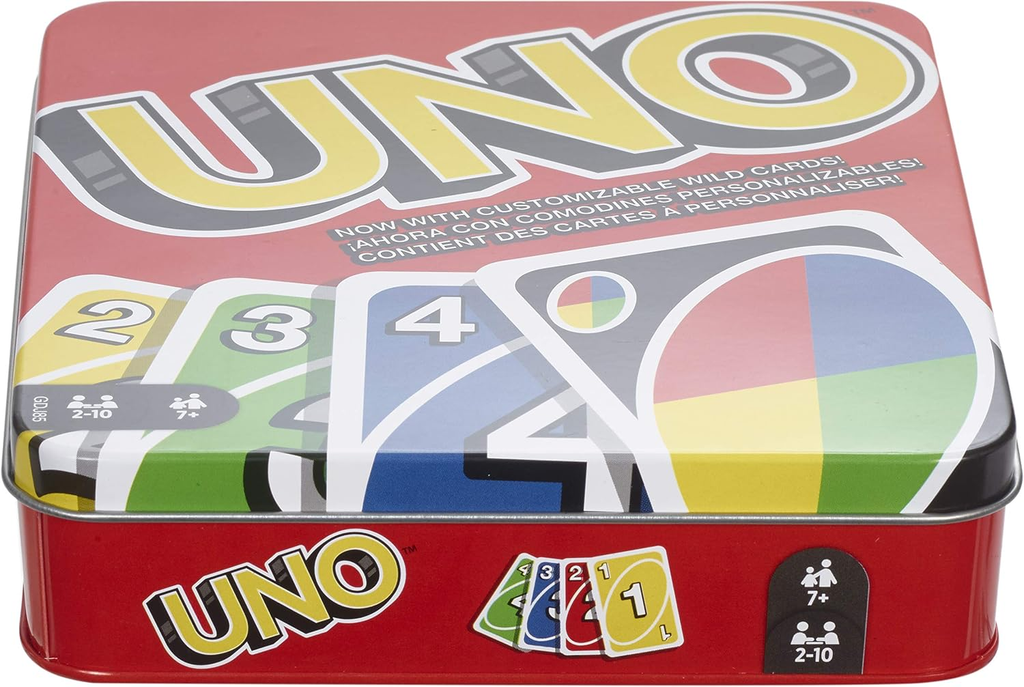
This particular Amazon Exclusive version, model GDJ85 and ASIN B07P6MZPK3, packages the game in a collectible storage tin rather than a conventional cardboard package. The set contains 112 cards and instructions. It is designed for 2 to 10 players ages 7 and up. :contentReference[oaicite:2]{index=2}
UNO tin at a glance
- Players: 2–10
- Recommended age: 7+
- Cards: 112
- Storage: Collectible metal-style tin
- Model: GDJ85
- ASIN: B07P6MZPK3
- Format: Classic UNO gameplay with travel-friendly storage
Why Put UNO in a Tin?
At first glance, the tin might seem like a cosmetic change. But for a card game, storage actually matters.
UNO is made from a relatively small deck of cards that can easily become scattered around a game shelf, backpack, or travel bag. The included tin gives the cards a dedicated place to live when the game is not being played. Mattel specifically describes this version as useful for storage and travel. :contentReference[oaicite:3]{index=3}
That makes the tin more than just decoration if you regularly take card games away from home. You can put the complete deck back inside instead of trying to keep the cards together in a loose stack.
It also makes the product a little more gift-friendly. A standard deck of UNO cards is already useful, but the collectible tin gives the package a more substantial feel without changing the basic game people already know.
UNO Collectible Storage Tin vs. a Classic Cardboard Box
If you’re specifically comparing the UNO collectible storage tin vs. classic cardboard box, the biggest difference is practicality rather than gameplay.
The cards themselves are still the central product. The tin does not turn UNO into a new game, and you should not expect a completely different rule set simply because this version comes in different packaging.
Where the tin makes sense is storage and portability. A rigid container is easier to protect in a backpack or game cupboard than loose cards sitting in an opened cardboard package. Mattel’s current listing also emphasizes the tin’s travel and storage purpose. :contentReference[oaicite:4]{index=4}
So if you already have a classic UNO deck in good condition, there is no reason to buy this version purely to get different gameplay. If your old deck is worn out, lost cards, or you want a better container for taking UNO on trips, the tin becomes much more relevant.
The Colorblind-Accessible Deck Is a Meaningful Feature
One feature that deserves more attention than the packaging is the deck’s color accessibility.
Mattel says special graphic symbols have been added to the cards to help identify the colors, allowing players with color blindness to distinguish the cards without relying on color alone. :contentReference[oaicite:5]{index=5}
That is a practical improvement because color is normally one of the central pieces of UNO’s matching system. The additional symbols provide another visual cue rather than asking the player to identify every card purely from its color.
This makes the deck worth considering for families looking for an inclusive card game for color-blind players. It does not change the basic rules, but it can make the information on the cards easier to interpret.
What About the Customizable Wild Cards?
This edition also includes three blank Wild cards that can be used for custom rules. That gives groups the option of writing their own rule onto the blank cards and changing the experience from one game to another. :contentReference[oaicite:6]{index=6}
The nice thing about this feature is that you don’t have to use it. If your family prefers standard UNO, simply follow the normal rules. If everyone wants to experiment, the blank cards provide a built-in way to create house rules.
That makes the deck slightly more flexible than a completely fixed card set, especially for groups that enjoy inventing their own variations.
A small feature with a big replay advantage
The customizable cards aren’t essential to UNO, but they give regular players another way to change the experience. You can keep them unused for traditional play or agree on a house rule before adding them to the deck.
How Good Is UNO for Travel?
This is probably where the tin format makes the most practical sense.
A card game doesn’t take much room in the first place, but keeping 112 cards together inside a dedicated container is convenient when you’re packing for a vacation, family visit, camping trip, or game night away from home. Mattel specifically markets the tin as travel-friendly. :contentReference[oaicite:7]{index=7}
UNO also works well for groups because the listed player range goes from 2 all the way up to 10 players. That is considerably more flexible than many small family games that are designed around only two or four players. :contentReference[oaicite:8]{index=8}
There is one practical consideration: card games still need a reasonably clean and flat place to play. The tin protects the deck while stored, but it obviously doesn’t replace a table or playing surface.
Is UNO a Good Quick Card Game for 7 Year Olds and Up?
UNO’s official age recommendation starts at 7 years old, which makes this version suitable for children who are ready to follow a few basic card rules as well as for teenagers and adults. :contentReference[oaicite:9]{index=9}
The basic matching system is easy to learn: look at the top discard card and see whether you can match its color, number, or symbol. The action cards add a little more complexity, but they are still straightforward once everyone understands what each symbol means.
What changes as players get older is not the rules so much as how they use the cards. Experienced players naturally start thinking about which cards to hold, when to use action cards, and how to make the most of their remaining hand.
That gives UNO more staying power than a purely luck-based children’s card game. There is still plenty of randomness, but players do have decisions to make.
Does UNO Actually Have Strategy?
Yes, although it is important not to oversell it.
UNO is not a deep strategy game. The cards you are dealt and the cards you draw have a major effect on what you can do. Sometimes the correct strategic decision simply isn’t available because your hand does not contain the necessary cards.
But there are still meaningful choices. You can decide when to play certain action cards, which color to call with a Wild, and how to manage the cards remaining in your hand. The game also rewards paying attention to what other players are doing.
So I would describe UNO as a light strategy card game with a large luck component. That balance is part of why it works across different ages.
What I Like About This Edition
- The tin is genuinely useful: it gives the cards a dedicated storage container and makes the set convenient to carry.
- Large player range: 2–10 players makes it practical for both small and larger groups. :contentReference[oaicite:10]{index=10}
- Color accessibility: graphic symbols provide an alternative way to identify colors on the cards. :contentReference[oaicite:11]{index=11}
- Customizable Wild cards: three blank Wild cards allow groups to create their own rules. :contentReference[oaicite:12]{index=12}
- Easy to learn: the central matching mechanic can be explained quickly.
- Good replay potential: different hands and card draws mean games do not play out exactly the same way.
What I Wouldn’t Overlook Before Buying
The tin is useful, but it should not be confused with a major gameplay upgrade. If you are comparing this product with another standard UNO deck, the fundamental game remains the same.
Also, the cards are still cards. Frequent handling, bending, spills, or rough shuffling can eventually wear them down. The care guidance for this model recommends avoiding bending or creasing the cards and storing them in the tin when not in use. :contentReference[oaicite:13]{index=13}
Another consideration is the number of players. While 2–10 is a wide range, a very large group can naturally make turns take longer because there are more people between your turns. For a big family gathering, that can be part of the fun; for someone who wants a very quick two-player game, a smaller deck game may feel faster.
The honest pros and cons
- Durable, convenient storage tin
- 2–10 player range
- 7+ age recommendation
- Color-identifying symbols
- Three customizable Wild cards
- Easy to take on trips
- Tin does not substantially change gameplay
- Luck still plays a major role
- Cards can wear with rough handling
- Large groups can mean longer waits between turns
- Players who already own UNO may not need another copy
Is the UNO Amazon Exclusive Tin Edition Worth It?
That depends largely on whether you value the storage and travel format.
If you don’t already own UNO, this is a straightforward way to get the familiar game in a sturdier storage format, along with the color-identifying symbols and customizable Wild cards. Mattel currently lists the tin version as a 112-card set for ages 7+ and specifically highlights its travel and storage benefits. :contentReference[oaicite:14]{index=14}
If you already have a perfectly good UNO deck, the decision is different. You are mainly paying for another copy of the game plus the tin and this edition’s included features. That can still make sense if your existing cards are worn, frequently misplaced, or you want a dedicated travel copy.
In other words, I wouldn’t tell an existing UNO owner that they need this edition. I would say the tin becomes more valuable if you actually have a reason to want better storage or a portable dedicated deck.
Is It a Good Family or Vacation Game?
UNO fits that role naturally. The rules are simple enough for younger players while still leaving adults with decisions to make, and the 2–10 player range means it can adapt to different group sizes. :contentReference[oaicite:15]{index=15}
That makes the tin particularly practical for family camping trips, vacations, waiting rooms, family game nights, and other situations where you want a screen-free activity that doesn’t occupy much space.
It also works as a small gift because the game is already familiar to many people. You are not asking the recipient to learn an unusual game before they can enjoy it.
Final Thoughts on This UNO Tin Review
The biggest mistake would be to judge this product solely by the fact that it is “UNO in a tin.” The tin is certainly the most visible difference, but the more interesting details are the ones that affect actual use.
You get 112 cards, a sturdy storage container, color-identifying symbols, three customizable Wild cards, and a game designed for 2–10 players ages 7 and up. :contentReference[oaicite:16]{index=16}
The result is still the UNO people know. It is fast to explain, easy to bring out at a family gathering, and flexible enough for both small and large groups. The main limitation is that the tin doesn’t magically make UNO a different or deeper game. If you already have a complete deck you like, the upgrade is primarily about storage and this edition’s additional features.
For someone buying their first UNO deck, someone who wants a dedicated travel copy, or someone who likes keeping card games in sturdy containers, the format makes practical sense. For an existing owner with a perfectly good deck and no need for another copy, there is less reason to replace what already works.
Bottom line: This UNO edition is best understood as a practical storage-and-travel version of a familiar family card game, rather than a fundamentally new UNO experience.
Its strongest points are the sturdy tin, broad 2–10 player range, color-identifying symbols, and customizable Wild cards. Its biggest drawback is simply that the core gameplay remains the same classic UNO experience.
Affiliate disclosure: This post contains affiliate links. If you purchase through one of these links, OzoneShip may earn a commission at no additional cost to you. Product details, pricing, availability, and packaging can change, so check the current Amazon listing before purchasing.