UNO Show ’Em No Mercy at a Glance
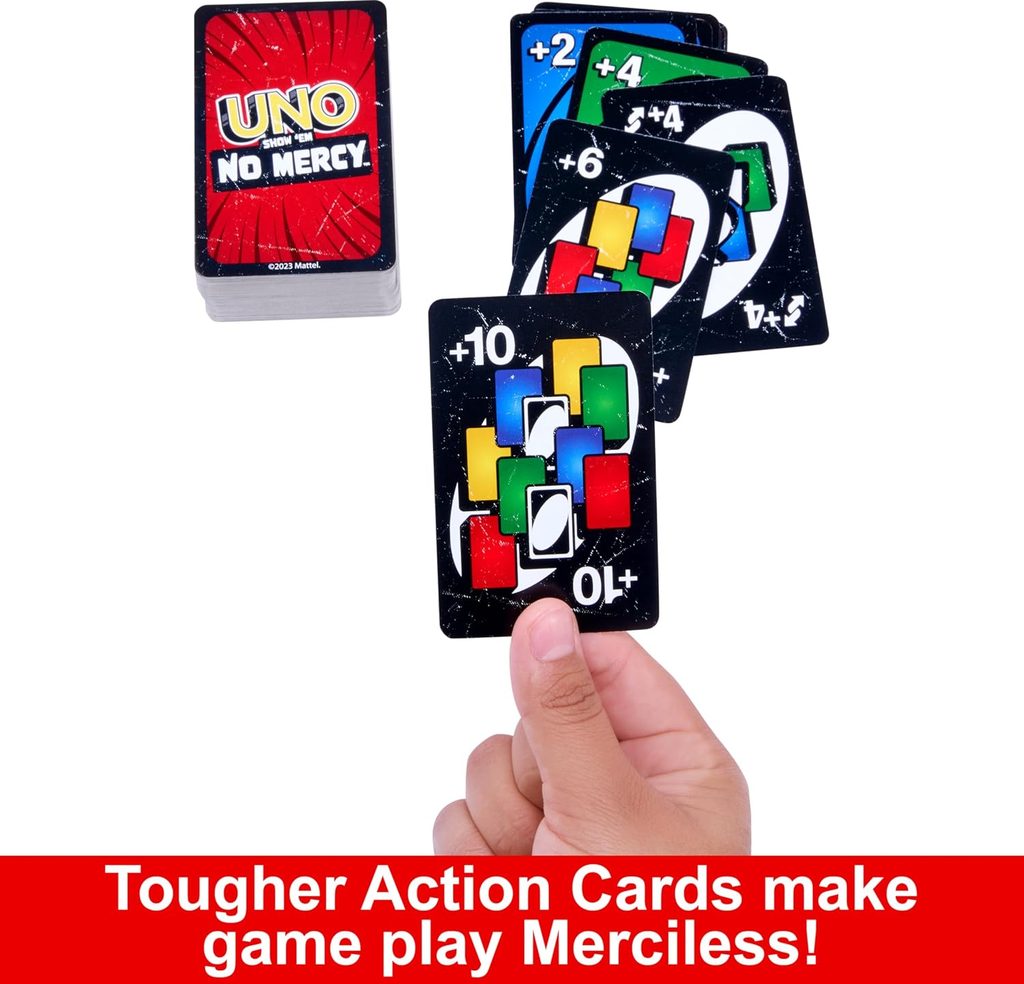
UNO Show ’Em No Mercy takes the familiar UNO formula and turns the pressure way up. Instead of simply racing to get rid of your cards, you have to deal with heavier draw penalties, hand-swapping rules, stacking, and the famous 25-card Mercy Rule. This particular version comes in a portable storage tin, making it especially interesting for families who want something they can keep together for game nights, trips, and parties.
UNO Show ’Em No Mercy at a Glance
Game: UNO Show ’Em No Mercy
Edition: Storage & Travel Tin
Cards: 168
Players: 2–6
Recommended age: 7 years and up
Model: HXT57
UNO Show ’Em No Mercy Tin Review: What Makes This Edition Different?
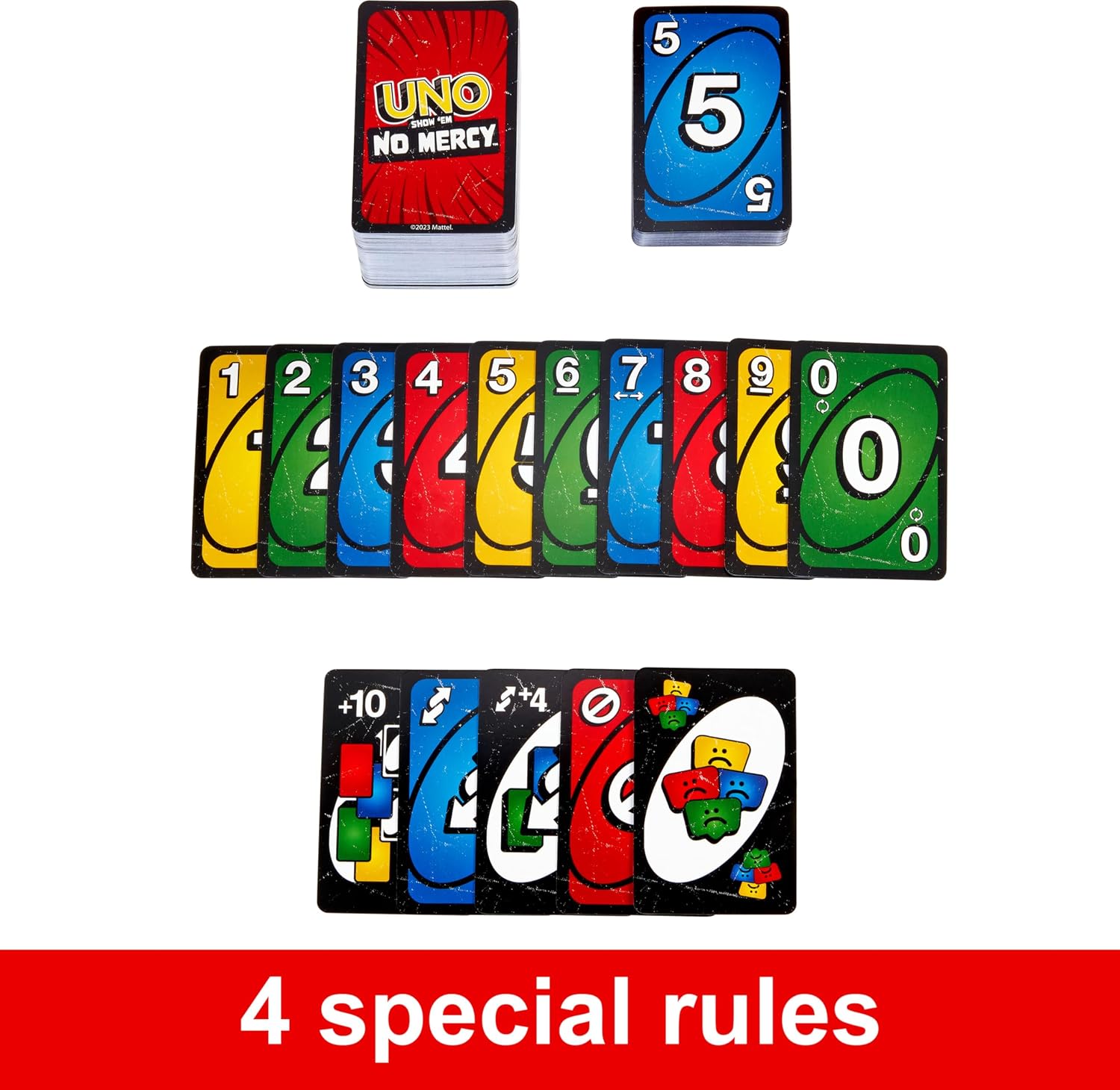
The first thing to understand is that this is not just classic UNO placed in a nicer box. Mattel describes Show ’Em No Mercy as a substantially tougher version of the game, adding 56 cards to the classic-style deck for a total of 168 cards. The result is a game with more aggressive action cards and more ways for a comfortable lead to disappear very quickly.
The collectible tin is an important part of the appeal too. When a card game contains this many cards, having a dedicated container makes more sense than tossing a loose deck into a drawer or trying to keep a cardboard package in good condition. The tin is designed for storage and travel, which fits the product particularly well because UNO is the type of game people naturally bring along on vacations, sleepovers, family visits, or weekend trips.
How Many Cards Are in UNO Show ’Em No Mercy Tin?
There are 168 cards in the deck, along with the game instructions. That is considerably more than a standard 112-card UNO deck, and the additional cards are not simply duplicates that make the box look fuller. Show ’Em No Mercy uses those extra cards to introduce stronger penalties and new ways to interfere with other players.
That larger deck also changes the feel of the game. A round can swing dramatically because players have access to cards that can increase another player’s hand very quickly. So although the core idea remains recognizable, this is much less of a relaxed color-and-number matching game and much more of a competitive take on UNO.
UNO No Mercy Tin Edition vs. Cardboard Box
For many buyers, the biggest practical question is whether the tin is actually worth choosing over a regular cardboard-box version. The answer depends more on how you plan to use the game than on the rules themselves.
A cardboard package can be perfectly adequate when the deck mostly stays on a shelf or in a game cabinet. The advantage of the tin becomes clearer when the game moves around frequently. A dedicated metal container keeps the cards and instructions together and gives the whole set a more compact, purpose-built storage solution.
That makes this version a particularly sensible choice for people searching for travel-friendly card games in metal cases. It is easier to throw into a bag without worrying about a flimsy cardboard package getting crushed. Just remember that a tin protects the cards from getting scattered or the package getting damaged; it does not make the cardstock itself waterproof or indestructible.
How Does the Mercy Rule Work in UNO No Mercy?
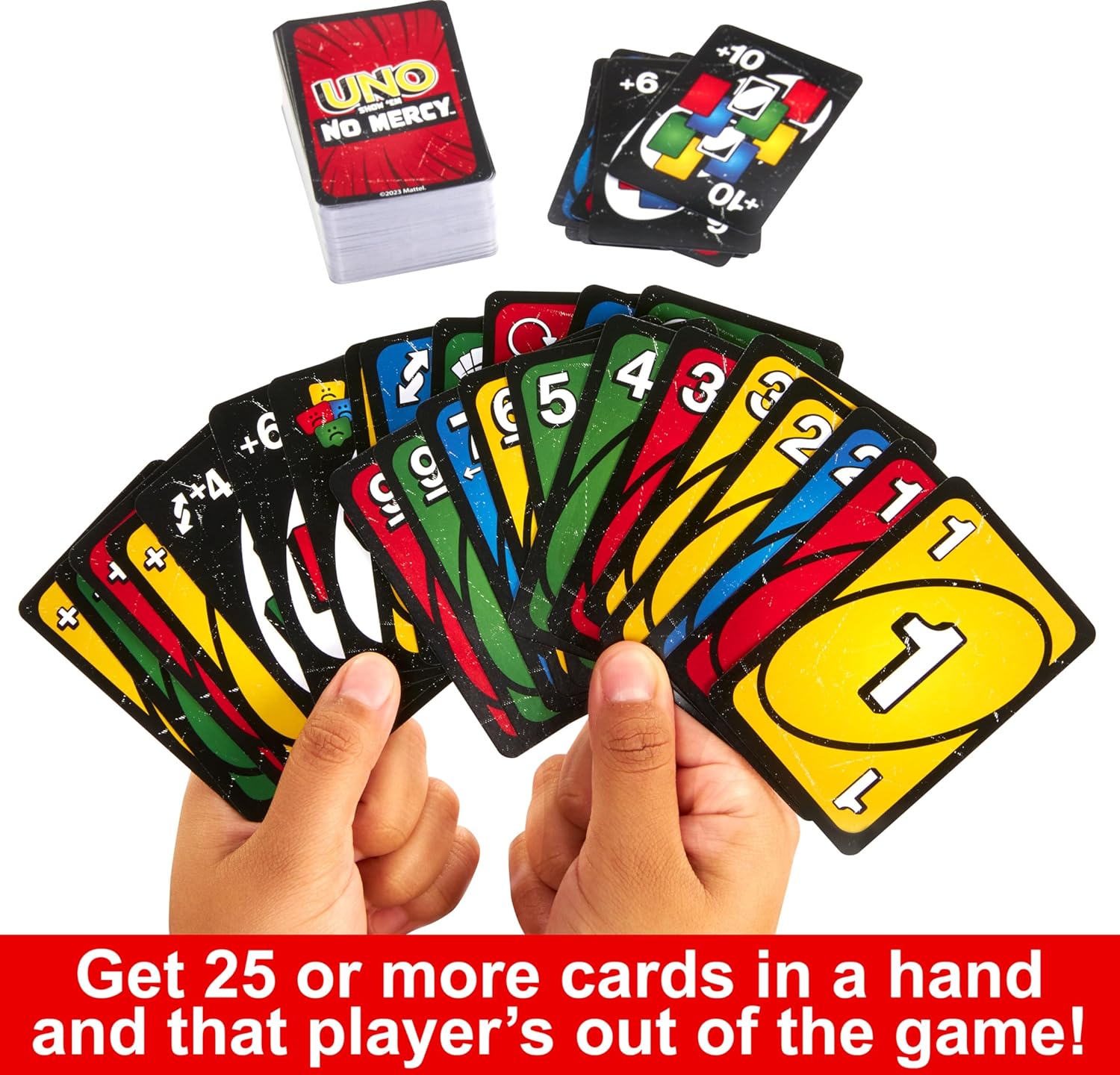
The Mercy Rule is one of the biggest changes from ordinary UNO. When a player’s hand reaches 25 cards or more, that player is eliminated from the game.
This changes the objective in an interesting way. Normally, having a giant hand is bad because it puts you farther away from getting rid of your cards. Here, it can actually knock you completely out of the game. That creates a second route to victory: you can win by playing your last card, or you can eventually be the only player left after everybody else has been eliminated.
For younger players, this rule is probably the first thing parents should explain before starting. Seven-year-olds who already understand regular UNO can learn it, but the consequences can feel much harsher than what they are used to. A player can go from thinking they are safely in the game to suddenly facing elimination after a big chain of draw cards.
UNO No Mercy Stacking Rules Explained
Stacking is arguably the mechanic that gives this edition its identity. When a draw card is played, the next player can respond with an equal or higher draw card, passing the growing penalty onward.
For example, a +4 can be answered with a +4, +6, or +10. If another player can continue with a qualifying draw card, the total keeps increasing. Eventually someone may be unable to continue the chain and must take the accumulated penalty.
This means a question such as “Can you stack Draw 10 in UNO No Mercy?” has a simple answer: yes, provided the card being played meets the stacking requirement. A +10 can become a very serious threat because the penalty can be passed forward rather than immediately absorbed by the next player.
It also means experienced players will start paying attention to what high-value draw cards other people might still be holding. That adds more hand-management and timing decisions than you normally get from basic UNO.
The 7 and 0 Rules Add Another Layer of Chaos
Show ’Em No Mercy also gives the number cards themselves a new purpose. Playing a 7 requires you to swap your hand with another player of your choice. A 0 makes everyone pass their hand to the next player in the current direction of play.
Those rules are easy to understand but can completely change the table. A player who has carefully built a small hand may suddenly inherit a much larger one, while the player who looked close to winning may find their advantage gone.
That is one reason this game feels much more unpredictable than traditional UNO. There is still plenty of luck involved, but players are also watching the size and composition of other hands and deciding when an action card can cause the most disruption.
UNO Show ’Em No Mercy vs. UNO FLIP
These two games both make classic UNO more intense, but they do it in different ways.
UNO FLIP! uses a double-sided deck. When a FLIP card is played, everyone’s cards, the draw pile, and the discard pile are turned over, moving the game to a different side with stronger action cards. Show ’Em No Mercy instead focuses on a larger deck, stacking penalties, hand swapping, and eliminating players who reach 25 cards.
So the distinction is fairly straightforward: UNO FLIP is built around changing the side of the deck, while No Mercy is built around escalating penalties and surviving them. Both are more complicated than classic UNO, but the source of the chaos is different.
Is UNO Show ’Em No Mercy Too Mean for 7-Year-Olds?
Mattel lists the game for ages 7 and up, but age is only part of the equation. The more useful question is whether the child enjoys competitive games where another player can directly disrupt their progress.
A seven-year-old who already enjoys regular UNO, Skip-Bo, competitive board games, or other take-that style games may have a lot of fun with No Mercy. A child who becomes frustrated when someone reverses a winning position or takes a large number of cards may prefer classic UNO instead.
Adults should also expect the tone to be different. The title is playful, but the rules really do encourage players to attack each other’s progress. That can produce plenty of laughter among competitive families, while more sensitive players may find some rounds frustrating. There is nothing wrong with either preference; this game simply has a narrower personality than classic UNO.
Is This a Good Family Travel Card Game?
The tin makes the product especially appealing for travel. There are no batteries, no board to unfold, and no large collection of pieces to keep track of. Once the deck is out, players only need enough space for the draw and discard piles and their hands.
The official player range is 2 to 6 players, so this is not the choice for a giant party where everyone wants to play at the same time. For a family, small group of friends, or vacation group, however, six seats is enough for a lot of situations.
It also works nicely as a screen-free vacation game because the learning curve is relatively manageable for anyone who already knows UNO. The difficult part isn’t understanding the basic matching system; it’s remembering the additional rules and learning when to use the more powerful cards.
What I Like About the UNO No Mercy Tin
✔ 168-card deck: There is considerably more variety and more opportunities for unexpected swings.
✔ Useful storage tin: The container is genuinely practical for keeping a large deck organized and making the game easier to travel with.
✔ Stronger strategic element: Stacking and hand manipulation add decisions beyond simply matching colors and numbers.
✔ Easy to recognize for UNO fans: Players familiar with standard UNO won’t be starting from zero.
✔ Good group size: With support for 2–6 players, it fits many family and friend-group situations without requiring a huge table.
Where the Game May Not Fit Everyone
The same features that make No Mercy exciting can also be its downside. The game can create very large hands, and stacking penalties can make a round feel considerably more chaotic than classic UNO. Some players will love that unpredictability; others may prefer a game where their progress is easier to control.
The 25-card elimination rule is another consideration. Once everyone understands the system it is easy to remember, but new players have several special rules to learn at once. A quick explanation before the first round can prevent confusion, especially around stacking and the 7/0 rules.
And although the storage tin is a nice upgrade, buyers should not mistake it for a rugged outdoor game. The product is still a card game with cardstock cards, so keeping the deck dry and treating the cards carefully is sensible.
Is UNO Show ’Em No Mercy Worth Buying?
For someone who already enjoys UNO and wants a more competitive, unpredictable version, the No Mercy tin edition makes a strong case for itself. The additional cards are tied directly to new mechanics, and the storage tin makes the larger deck easier to keep together.
The bigger question is whether you actually want the “No Mercy” part. This isn’t simply classic UNO with a nicer container. The stacking chains, 7 and 0 hand manipulation, heavy draw penalties, and 25-card elimination rule can dramatically change the mood at the table.
For competitive teenagers, adults, families who enjoy playful revenge, and groups looking for a more intense card game, that difference is the whole attraction. For younger children who are still learning basic turn-taking or players who dislike highly disruptive games, classic UNO may be the more natural starting point.
Our Take
UNO Show ’Em No Mercy works best when everyone at the table understands that the game is designed around sudden reversals, big penalties, and direct competition. The 168-card deck and portable tin make this version more substantial than a basic UNO purchase, while the unusual rules give experienced UNO players a genuinely different experience rather than just another standard deck.
Affiliate Disclosure: This post contains affiliate links. When you purchase through a link on this page, OzoneShip may earn a commission at no additional cost to you. We focus on providing useful product information and honest buying considerations.