What This Mini Soccer Game Actually Is
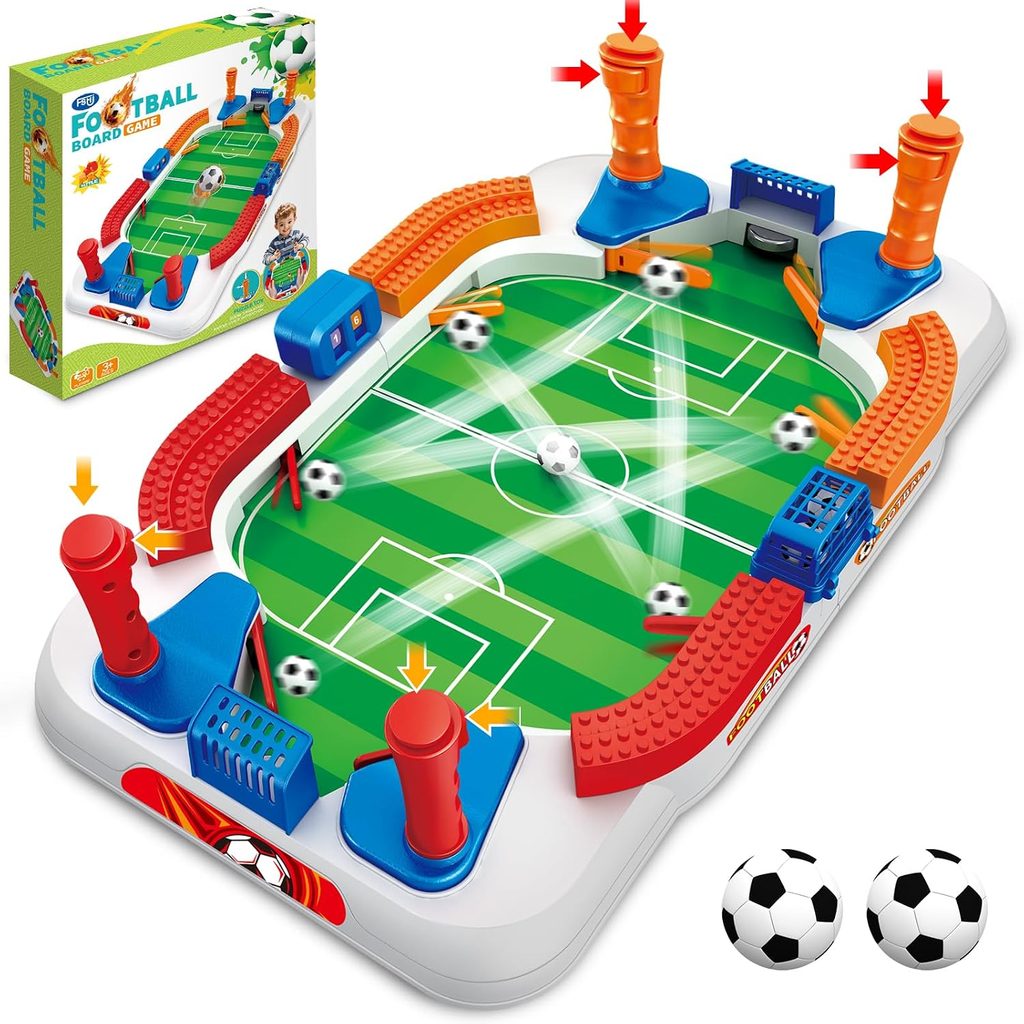
A full-size foosball table is fun until you have to figure out where to put it. This mini tabletop soccer game takes a different route: it uses a shallow playing field, four spring-style flippers, two balls, a manual scoreboard, and a bell in each goal, all in a board that can sit on a table or floor.
It feels closer to pinball mixed with soccer than traditional rod foosball. You are not spinning rows of players. Each person controls two flippers and tries to keep the ball moving toward the opposite goal. That difference matters, because it makes the game quicker to understand for younger kids and much easier to fit into a small playroom.
Quick take: This is a compact two-player soccer game for families who want something more physical than a board game but do not have room for a real foosball table.
Best reason to consider it: the four-flipper setup is simple, fast, and does not need batteries. The main compromise is that it is still a lightweight plastic tabletop toy, not a substitute for a sturdy rod-style foosball table.
What This Mini Soccer Game Actually Is
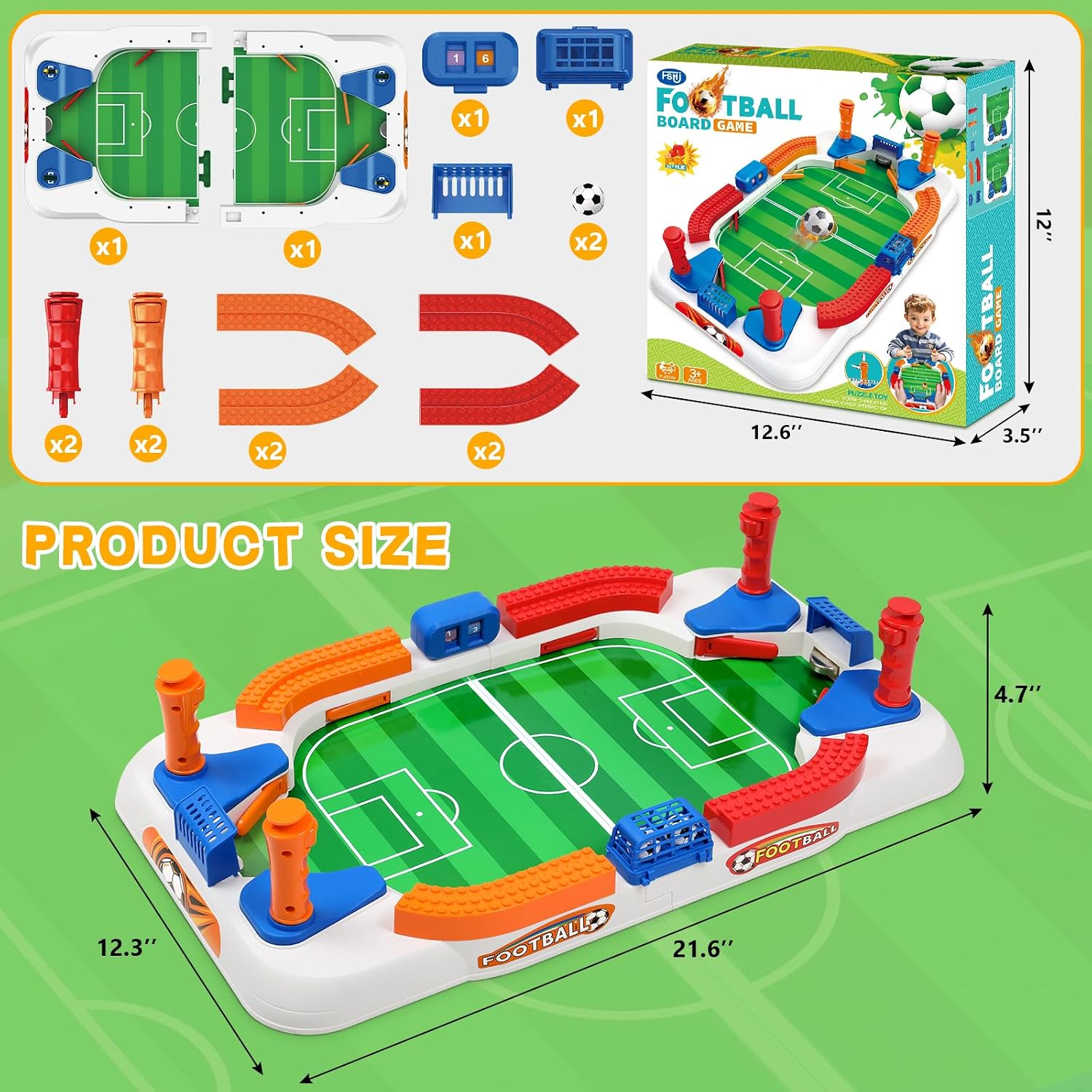
The model linked here is the choopheme Mini Foosball Table Game, model 666-102A. The current product information lists the board at roughly 21.7 × 12.4 × 4.6 inches, so it is large enough to feel like a proper tabletop game without taking over the room.
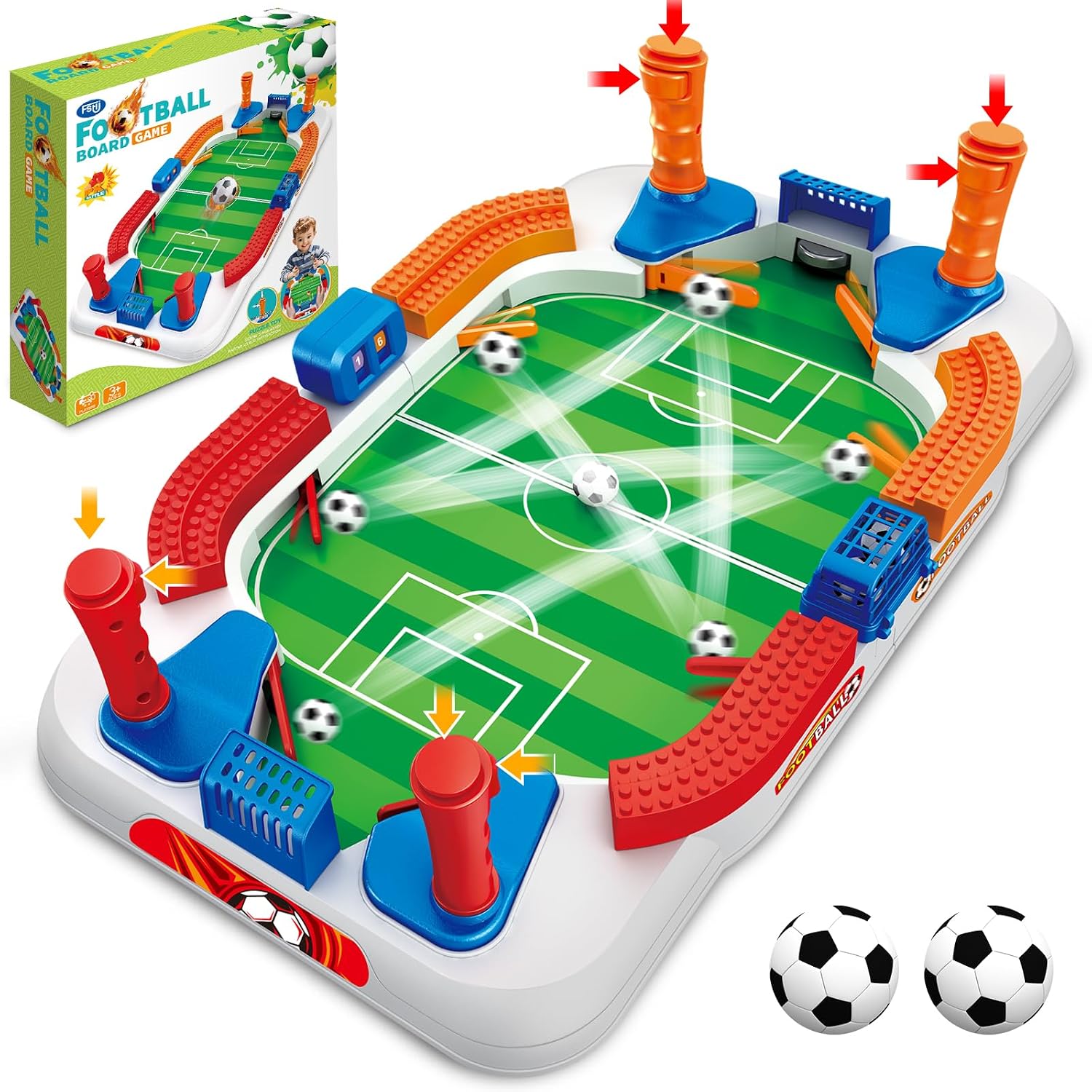
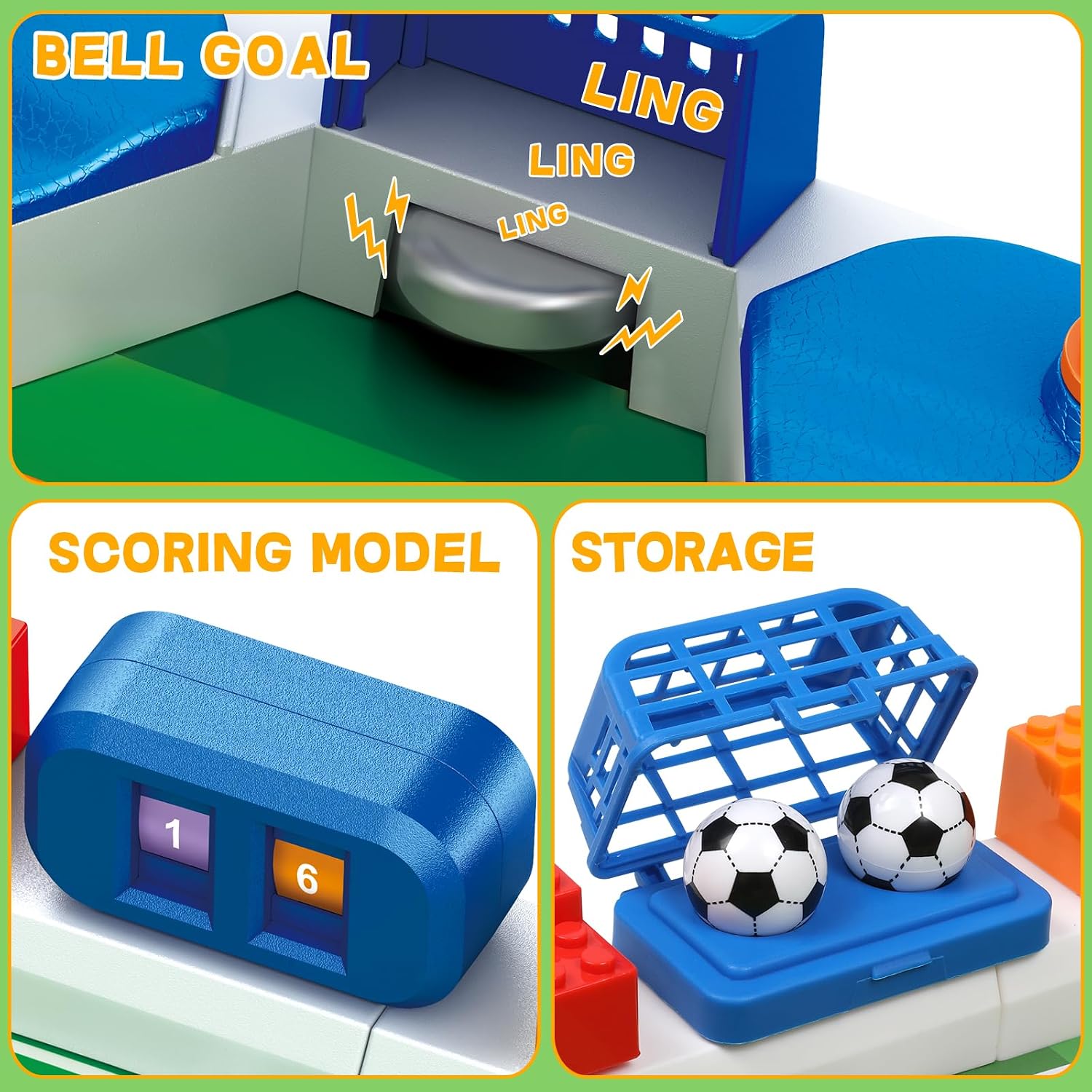
There are two controls on each end. Pressing them moves the flippers on the field, letting players knock the ball forward, block a return, or redirect it toward the goal. A manual score counter sits at the end of the board, and a goal bell gives each successful shot a satisfying little finish.
The set also includes two soccer balls. There is no motor, no electronic scoring system, and no battery compartment. Everything happens through the mechanical flippers and the slope of the board.
Useful details before you buy
- Players: 2
- Power: Completely manual — no batteries
- Controls: Four flippers, two controlled from each end
- Included: Tabletop field, scoreboard, two balls, goal bell system
- Field design: Approximately 5° of tilt to help keep the ball moving
- Size: About 21.7 × 12.4 × 4.6 inches
- Material: Primarily plastic
The Flippers Are the Part That Makes It Fun
If you are expecting traditional foosball, the first round may surprise you. There are no long metal rods with miniature players attached. Instead, each side gets two flippers positioned near its half of the field.
That changes the rhythm of the game. A child does not have to learn how to twist and slide several rods at once. They can focus on two buttons: one flipper covers one side, the other covers the other side. When the ball rolls into range, press at the right moment and try to send it back.
This makes it easier for younger children to understand than a full foosball table, but it does not make every shot automatic. Timing still matters. Hit too early and the ball can roll past the flipper; hit too late and it may already be sitting in your goal.
The board’s slight incline helps keep the ball moving instead of letting every rally die in the middle. That small design detail is more important than it sounds. A tabletop game like this becomes frustrating very quickly if players are constantly reaching in to push a stalled ball.
It Is More Pinball Soccer Than Traditional Foosball
This distinction is worth making before anyone orders it expecting a miniature version of an arcade foosball table.
A rod table gives players far more control. You can pass between rows, defend with several figures, trap the ball, and develop more complicated techniques. This tabletop game strips most of that away. The ball comes toward you, you use the flippers, and you try to send it back with enough direction to beat the other player.
That simplicity is exactly why it can work well for younger kids. There is almost no explanation between opening the game and understanding what you are supposed to do.
For an older child who already plays serious foosball, though, this may feel limited. It is better thought of as a tabletop pinball soccer game than as a training version of traditional foosball.
Would a 5- or 6-Year-Old Actually Enjoy It?
For a child who already likes soccer, the theme does a lot of the work. There is an obvious goal, the ball moves constantly, and the bell gives scoring an immediate payoff. Nobody has to read cards or remember a page of rules.
It also creates a nice middle ground between quiet tabletop play and running around outside. On a rainy afternoon, two kids can still play something active without needing enough room to kick a real soccer ball through the house.
The manufacturer’s listings market the game broadly toward young children, but parents should still pay attention to the small-parts choking warning. The included balls are small enough that this should not be treated as an unsupervised toddler toy just because a marketplace listing mentions very young ages.
For most families, the strongest fit is probably children who are old enough to understand turn-by-turn competitive play and keep the small balls where they belong.
The Goal Bell Is a Small Detail Kids Will Notice
A goal in a tabletop game can otherwise feel strangely quiet: the ball rolls in, someone says “I scored,” and then everybody resets.
Here, the built-in bell gives the goal some feedback. It does not change how the game works, but it makes scoring feel more definite. For a younger child, that little sound is probably more memorable than the manual score counter.
The score counter is still useful because matches can move quickly. Once kids start trading goals, it is easy to forget whether the score is 4–3 or 5–3 without some way to keep track.
How Much Space Does It Really Need?
This is where the design has a real advantage over regular foosball. At roughly 22 inches long, it can fit on many coffee tables, dining tables, playroom tables, or even the floor.
You still want some clear space around each end so both players can reach the controls comfortably. But there are no long rods sticking out from the sides, which makes the footprint much easier to manage.
If your reason for searching for a compact tabletop soccer board for a small playroom is simply that a full table is unrealistic, this format solves that problem well.
Assembly Looks Simpler Than a Real Foosball Table — But It Is Still Assembly
One advantage of this style of game is that you are not building a piece of furniture. There are no heavy legs to level or long rods to thread through rows of figures.
The listing describes it as easy to assemble, and the finished structure is mostly plastic. That said, I would still plan on an adult handling the initial setup rather than handing the box to a young child and expecting the game to be ready immediately.
Once assembled, day-to-day use should be straightforward: put it on a flat surface, place a ball on the field, reset the score, and play.
What Works Well
No batteries. There is nothing to charge, pair, or replace before a game starts.
The controls are easy to understand. Two buttons per player are much less intimidating for younger kids than several foosball rods.
It is genuinely compact. The game gives kids a physical soccer-themed competition without dedicating permanent floor space to a foosball table.
Two balls are included. Losing one does not immediately make the game unusable.
The bell makes scoring satisfying. It is a minor feature, but exactly the kind of small feedback younger kids tend to enjoy.
And Where Does It Compromise?
The biggest compromise is depth. A conventional rod foosball table offers far more control and skill development. This game is intentionally simpler.
The second is construction. The sub-$30 tabletop category is mostly plastic, and buyers should set expectations accordingly. This is designed to be light enough to move around, not to feel like an arcade table.
There is also only room for two active players. Siblings can swap in between rounds, but this is not a four-player party game where everyone joins at once.
Finally, the manufacturer’s broad age marketing should not replace normal judgment around small pieces. Families with toddlers in the house will want to keep track of the balls when the game is put away.
If your child wants “foosball,” ask what they mean. If they want fast soccer action on a table, this fits. If they specifically want rods, miniature players, passes, and traditional foosball techniques, this is a different kind of game.
Who Is It Best For?
I would put this on the shortlist for a child who loves soccer but does not have the room—or the budget—for a regular foosball table. It also makes sense for siblings who like quick one-on-one competitions and parents who want something screen-free that still has a bit of movement.
As a soccer birthday gift for a 6-year-old, it has an immediate advantage over generic toys: the child can look at it and understand what it is supposed to do. There is a field, a ball, two goals, and someone to beat.
It is less compelling for older kids who already expect the control of real foosball or for families that want a game several people can play simultaneously.
Is It Worth Buying?
At around the price point where this model has recently been listed—roughly $30—the question is really whether the compact format solves a problem for you.
If you have space for a full foosball table and want a game that children can grow into for years, a rod table offers much more depth. If you need something small enough to put away, simple enough for younger kids to understand quickly, and active enough to feel different from another board game, this design makes more sense.
The four flippers, sloped field, two balls, goal bell, and scoreboard all contribute something useful. None of those features is complicated, and that is probably the point. The game works because two players can sit down, understand the controls almost immediately, and start trying to beat each other.
Bottom Line
This mini tabletop soccer game is not a miniature traditional foosball table; it is a simpler flipper-driven soccer game built for quick two-player matches. That makes it easier for younger children and far easier to fit into a small home. The tradeoff is less control and less long-term depth. For a soccer-loving kid who wants a fast indoor game rather than a serious foosball setup, that trade makes sense.
Affiliate Disclosure: This post contains affiliate links. If you purchase through one of these links, OzoneShip may earn a commission at no additional cost to you. We have not claimed hands-on testing where none was provided; this review is based on product specifications and available research, and product details or pricing may change.